Posted by
Feri Adriyanto
Nov
18
As we know that ZnO is an II-VI semiconductor material which has wide range attractive applications for electronic and optoelectronic devices.Therefore, I will short-reported the low temperature growth ZnO nanorods by using liquid phase deposition (LPD).
The nanostructure has significant research interest due to of its specific physical properties and its potential use as a building block for nano-electronics and nano-optolectronics. In AMD lab, I am doing this research. The ZnO nanrodos growth on an ITO-laminated plastic substrate of PET by using LPD technique with zinc nitrate hexahydrate, Zn(NO3)2 and hexamethylenetetramine (HMT), C12H6N14 as main solution. The solution and plastic substrate was contained in teflon vessel and heated at varied deposition temperatures between 70° C and 95° C for 5 hours.
The concentration of HMT solution was varied between 0.10 M and 0.20 M, whereas the zinc nitrate hexahydrate solution was kept at 0.10 M. The control of the films’ morphology was also adjusted using a 0.1 M NaOH solution. Finally, the films were rinse and dried using deionized water and dry nitrogen, respectively.
Finally, ZnO nanorods on an ITO-laminated PET plastic substrate had been successfully grown in an aqueous solution under low temperature. This method was found to enable the control of the ratio of diameter to the length of the nanorods, making it applicable for the control of flexible nano-electronic devices.
Posted by
Feri Adriyanto
Nov
18
Here, my Advanced Material and Devices Lab of EE NCKU was located at Tzu-Chiang campus. Dr. Yeong-Her Wang is our advisor. He is distinguished enggineering professor from NCKU. He was professor of semiconductor devices, semicounductor devices physics, microvae devices and optoelectronics devices. He published 178 journal articles, and he spending time with us every day. Now, our lab does work primarily in the field of semiconductor devices, and RF circuit design, and current projects include MOSHEMT, and TFT. Our lab has 1 postdoctoral fellow, 23 PhD students, and 17 master students. Wow ! It’s too big lab members.
Dr. Yu-Ju Lin is postdoctoral fellow in my lab. He lives in Kaohsiung. Every Saturday night, he going to his family, and return back at Sunday night. His research involves pentacene organic TFT. He is very kindly lab-mates. Sarbani Basu, and Pramod K. Singh are international student in our lab. They are Indian student and now they 5th year PhD student. They published 4 journals. They enjoys working with GaN/AlGaN MOSHEMT and RF circuit MOSHEMT. Wen-Jen Lin is one of Prof. Mau-Phon Houng student. Some times, he share food with me. He likes Indonesian food. He is 2nd year PhD student.
In my opinion, our lab mates have anything better to do. Because, they have well-rounded lives of my work. I wanted to put a pictures of my lab-mates. However, I don’t really have any right now. Well, there is this one. This picture was taken when our prof birthday party. We went to famous Japan restaurant.

Posted by
Feri Adriyanto
Nov
17
Our advisor; Prof. Yeong-Her Wang, Dr. Kuan-Wei Lee, and me went to Beijing at October 19 - 24, 2008. We has been attended one of the bi-annual event i.e. the 9th International Conference on Solid-State and Integrated-Circuit Technology organized by IEEE Beijing Section, Chinese Institute of Electronics (CIE), IEEE Electron Devices Society, and IEEE EDS Beijing Chapter. This conference will provided an international forum for the presentation and discussion of recent advances in solid-state and integrated circuit technology.
I was presented a paper in oral session which the title of ZnO Nanorods on Plastic Substrate from Zinc Nitrate Hexahydrate and Hexamethylenetetramine Solution. Actually, this is my old data and of course; only preliminary research, and therefore, further investigation is certainly needed. I have got no confidence. I was argued about this to my wife, and she said to me that if you feel that your paper will not important for other person then you feel low, your confidence goes down.
In this paper, I had been grown the ZnO nanorods with a typical diameter of 0.3 mm and a rod length of 3.0 mm on a polyethylene terephthalate plastic substrate were prepared through the solution route method. The hexagonal structure with (100) and (101) reflection peaks were dominant for all the films. I also proved that the surface morphology strongly depends on the HMT concentration. The main elements of Zn and O atoms performed with excellent binding energy on the surface. Moreover, atomic force microscopy study of the surface indicates that the main precursor of Zn(OH)2 has an important role in the decomposition process between zinc nitrate hexahydrate and HMT. You can also found from my paper that the activation process at the higher hydrolysis of NaOH released plenty of OH- into the solution, thus enabling the deposition of ZnO nanorods. I pleased you know to check one of my data as shown in this figure. The full paper can be found by download from here:


Posted by
Feri Adriyanto
Oct
16
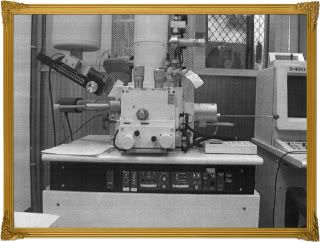
Last week, I have been measured my samples by Hitachi - S4100 high resolution scanning electron microscopy machine.

We have three samples with difference conditions. In my experiment, the zinc nitrate hexahydrate and hexamethylenetetramine were employed as parent solutions. The substrate was used on an ITO-laminated plastic substrate of polyethylene terephthalate.
The morphology of the films was further adjusted by using NaOH solution. The NaOH solution concentration was kept at 0.1 mol/liter in a 2 ml volume. The microphotographs of the films are shown in figure below.
It was found that our films with 2 ml NaOH show a tip-nanorods morphology with a typical diameter of 0.3 micrometer and a rod length of 3.0 micrometer. This result indicates that the ZnO with nanorods structure has been successfully grown on plastic substrate.
I believe that the control dimension and morphology in ZnO nanorods is critical issues for the fabrication of plastic electronic and optical plastic nanodevices.